


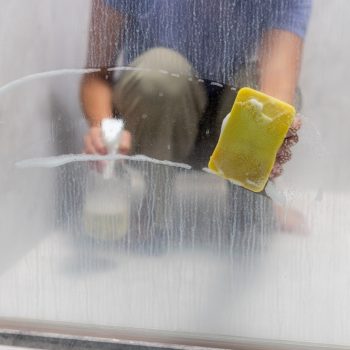
Hard water stains, also called limescale or mineral deposits, are those chalky white spots and cloudy patches that dull shower glass, taps, tiles and toilets. They’re mainly calcium deposits left behind when water evaporates and they build up faster in hard-water areas. The good news: with the right method (and the right microfibre cloth), they’re easy to remove and even easier to prevent.
This guide from us shows you exactly how to remove water stains from shower glass, tackle hard water stains in the shower (tiles, grout, chrome) and how to prevent hard water stains so your bathroom stays crystal clear between deep cleans.
TL;DR (Quick Recipes by Surface)
-
Shower glass: Warm vinegar soak → non-scratch wipe → rinse → dry and polish with a glass microfibre cloth for a smear-free finish.
-
Tiles & grout: Spray vinegar solution, dwell 5–10 mins → agitate with soft brush → rinse → dry with all-purpose microfibre.
-
Chrome taps & shower heads: Wrap with vinegar-soaked cloth 30–60 mins → brush gently → rinse → buff dry with polishing microfibre.
-
Toilets: Use a limescale remover gel around the bowl → dwell → scrub → flush → dry exterior with microfibre.
-
Prevention: After every shower, squeegee + dry with microfibre, leave the door open to ventilate and do a 1-minute daily spray/wipe.
Safety first: Never mix bleach with acids (like vinegar or limescale removers). Always ventilate and wear gloves.
What You’ll Need (Bathroom Limescale Toolkit)
-
Microfibre cloths (at least two types):
- Glass/finishing microfibre for streak-free polishing of glass & chrome.
- All-purpose/medium-duty microfibre for general wiping and drying.
- Glass/finishing microfibre for streak-free polishing of glass & chrome.
-
Squeegee (daily prevention).
- White vinegar (distilled), citric acid powder or a dedicated limescale remover.
- Bicarbonate of soda (baking soda) (optional for gentle scouring).
- Non-scratch scrub pad & old toothbrush (edges and fixtures).
- Spray bottle, rubber gloves and (optional) glass sealant for longer-term protection.
Are microfibre cloths important? Yes, ultra-fine fibres lift mineral residue and soaps without scratching and the split-fibre structure leaves surfaces dry and streak-free.
Important Precautions for Bathroom Cleaning
-
Never mix bleach with acids (vinegar, citric acid or acid descalers), this can release dangerous fumes. If you’ve used bleach recently, rinse thoroughly with plenty of water before using anything acidic.
-
Mind natural stone (marble, travertine, limestone): avoid acids entirely. Use pH-neutral stone cleaners only.
-
Patch test on an inconspicuous area before full application.
-
Ventilate well and wear gloves.
How to Remove Water Stains From Shower Glass (Cloudy Doors & Screens)
Best for: white haze, spots, mineral film on glass.
-
Make a warm vinegar spray
Mix 1 part distilled white vinegar with 1 part warm water in a spray bottle. Warmth helps the acid work faster.

-
Saturate and dwell (5–10 minutes)
Spray the glass generously from top to bottom. For heavy build-up, hold soaked paper towels or a microfibre against the glass and secure with masking tape or cling film to keep it wet.
-
Gently agitate
Wipe with a non-scratch pad or an all-purpose microfibre cloth. Edges and hardware can be detailed with an old toothbrush.
-
Rinse thoroughly
Use warm water to flush away loosened mineral salts.
-
Dry & polish for the finish
Wipe completely dry with an all-purpose microfibre, then polish with a glass microfibre cloth to a brilliant shine.
For stubborn glass stains:
- Make a citric acid gel: dissolve 2-3 tbsp citric acid in just enough warm water to form a syrupy solution. Apply, dwell 10-15 minutes, agitate, rinse and dry. Acids react with limescale to form soluble salts that rinse away.
- If the glass still looks patchy after perfect cleaning and drying, it might be etched (permanent micro-pitting). Cleaning can’t reverse etching, but a glass polishing kit or a professional refinish may improve clarity.
Hard Water Stains in the Shower: Tiles, Grout & Trims
Ceramic/porcelain tiles:
- Spray with warm vinegar solution, leave 5–10 minutes.
- Lightly scrub tile faces with a soft pad, detail grout lines with a brush.
- Rinse and dry with a microfibre cloth to prevent new deposits.
Grout tips:
- Keep acids short contact on cement grout avoid on epoxy grout unless the manufacturer allows it.
- For heavy mineral crust at edges, repeat shorter, multiple dwell cycles instead of one long soak.
Acrylic bath tubs & enclosures:
- Use diluted vinegar (1:2 vinegar:water) and non-scratch pads only. Rinse promptly.
Natural stone (marble, travertine, limestone):
- Skip acids entirely. Use pH-neutral stone cleaner and a soft microfibre; wipe dry. If mineral spotting persists, consult a stone-care pro.
Chrome & Stainless Fixtures (Taps, Rails, Shower Heads)
Taps and fittings:
- Wrap a vinegar-soaked microfibre around the fixture, leave for 30-60 minutes.
- Gently brush around bases and threads.
- Rinse, then buff dry with a glass/polishing microfibre for a mirror finish.

Shower heads (for weak spray):
- Remove and soak in warm vinegar for 30-60 minutes. After, brush the nozzles, rinse well and reinstall. If not removable, half-fill a bag with warm vinegar, submerge the head and secure the bag with an elastic band. Rinse thoroughly afterward.
Why acids work here: Acids such as acetic (vinegar) or citric dissolve calcium carbonate scale so it can be rinsed away.
Toilets: Rings & Below the Waterline
- Apply a limescale remover gel around the bowl, targeting the ring and under the rim.
- Dwell as directed on the label (usually 10–15 minutes).
- Scrub & flush.
- Wipe the exterior dry with a microfibre cloth to prevent spotting.
Avoid mixing toilet bleach with acidic descalers. If you use bleach for hygiene, rinse thoroughly with water first, then use the descaler on a separate pass.
Sinks, Basins & Glass Shelves
- Treat mineral spotting with the same vinegar/citric approach.
- Rinse and dry fully.
- Finish with a glass microfibre cloth on mirrors and shelves for a streak-free shine.
How to Prevent Hard Water Stains (Habits That Actually Work)
Daily (60 seconds):
- Squeegee glass and tiles after the last shower.
- Dry quickly with a microfibre cloth, especially edges, taps and trims where drips collect.
After each clean:
- Consider a glass sealant or hydrophobic coating on doors/screens to slow mineral bonding. (Always check manufacturer guidance first.)
Weekly:
- Quick vinegar spray on glass and tiles; rinse and dry.
- Check and wipe taps and shower heads before deposits harden.
Why prevention matters: Limescale is a visible sign of hard water; once it dries on a surface, calcium salts bond and worsen over time, making future cleaning slower.
Common Scenarios & Pro Tips
-
“Vinegar didn’t work.” Try a second dwell with fresh solution and keep surfaces wet. For heavy build-up, step up to citric acid gel or a commercial descaler.
-
“It looks clean but still cloudy.” If a perfectly cleaned and dried panel still looks foggy in certain light, the glass could be etched. Try a specialist glass polish or consider replacing the panel.
-
“Bicarb + vinegar fizz?” Harmless, but the fizz mostly neutralises the acid. Use bicarb as a separate gentle abrasive paste if needed; then rinse; then apply acid and let it dwell.
-
“Scratches on glass.” Avoid abrasive pads; use soft microfibre cloth and non-scratch tools.
-
“Smears after cleaning.” Always finish with a glass microfibre and make sure the cloth is clean and dry. Residual detergent or a damp cloth causes streaks.
The Microfibre Advantage (And How to Choose)
-
Glass & Polishing Cloths: Ultra-tight weave or “fish-scale” textures lift fine residue and polish to a sheen, perfect for shower glass, mirrors and chrome.
-
All-Purpose / Medium-Duty Cloths: Medium-Duty 300GSM microfibre cloths are excellent for general wiping, drying and removing loosened mineral salts after rinsing.
-
Heavy-Duty (400 GSM): Even High absorbency for drying large surfaces fast to stop new spotting.
-
Colour-code your cloths (e.g., blue for glass, pink for sinks) to avoid cross-contamination in bathrooms.
FAQs
What causes hard water stains?
They’re mainly calcium carbonate deposits left behind when hard water dries. Heat (like hot showers) accelerates scale formation.
Is vinegar safe on everything?
No. Avoid acids (including vinegar) on natural stone such as marble or travertine. Use pH-neutral stone cleaners instead.
Can I mix bleach with vinegar for extra power?
Never. Mixing bleach with acids releases dangerous gases. Use on separate passes with thorough rinsing in between.
What’s better, vinegar, citric acid or a shop-bought descaler?
All three work. Acids dissolve limescale; commercial descalers are simply faster/stronger and often gel nicely on vertical surfaces. Choose based on severity and surface sensitivity.
How do I know if I’m in a hard-water area?
Check your local supplier or national maps for England & Wales; hardness varies by region and even street.
Step-by-Step: The One-Minute Daily Shower Habit
- After the last shower, squeegee from top to bottom.
- Wipe edges, door seals and hardware with an all-purpose microfibre.
- Polish the glass with a glass microfibre for a sparkling finish.
- Ventilate: leave the door open and fan on if available.
Stick to this for a week and you’ll notice dramatically fewer hard water shower stains and five-minute cleans instead of weekend scrubbing marathons.
Why This Works (Scientifically)
Limescale is primarily calcium carbonate. Acids (like acetic in vinegar or citric in lemon/citric acid) convert it into soluble salts that rinse away. Drying immediately stops new minerals from redepositing.
Ready to Put It Into Practice?
Keep your bathroom sparkling with the right tools. At Microfibre Cloth UK, we stock high-quality glass polishing cloths, all-purpose microfibre cloths and heavy-duty drying towels designed to make removing and preventing hard water stains effortless.
Order online today and get fast delivery straight to your door, so you can enjoy a limescale-free bathroom starting now.


